




Why Building a Smart Enquiry Layer can strengthen your P2P Process
Last updated:
01 Aug, 2025 |
4 Minutes Read
CFOs have made significant progress in modernizing Procure-to-Pay (P2P) operations—automating invoices, integrating ERPs, and streamlining procurement.
However, performance gaps still persist. Delays continue. Exceptions pile up. Supplier escalations don’t slow down.
This raises the question, “where’s the friction coming from?”
It’s not the systems. It’s what remains outside them.
Supplier enquiries—still handled through inboxes, spreadsheets, and informal chats—often lack structure, ownership, and visibility. When those interactions go unmanaged, performance suffers.
We’ve seen this pattern repeat across industries. Take, for instance, a global manufacturing firm with operations in 12 countries. Although, ERP automation and digitized workflows, they faced rising vendor escalations and stalled invoice closures.
“We didn’t have an enquiry system,” said the AP head.
“We had a collection of inboxes with no ownership.”
What Happens When Enquiries Are Left Unstructured
This isn’t a one-off scenario. In many finance operations—even mature ones—enquiry resolution falls through the cracks.
There’s no defined owner. No SLA. No system of record. The result? A series of silent breakdowns:
- Late invoice closures
- Duplicate or missed payments
- Delayed early payment discounts
- Compliance gaps with no audit trail
- Vendor frustration and loss of trust
At the manufacturing company, these issues were happening at scale:
Over 75,000 supplier interactions annually, but no unified process to manage them.
The table below outlines the root causes behind the enquiry-related delays:

This wasn’t a tech gap. It was a strategic blind spot—where supplier communication was treated as an afterthought, and performance quietly eroded.
Rebuilding the Enquiry Layer as a Finance Function
To address the inefficiencies, the company didn’t replace its ERP or add another system.
Instead, it repositioned enquiry handling as a formal component of its finance operations—designed for visibility, accountability, and measurable outcomes.
Here’s how the new model worked:
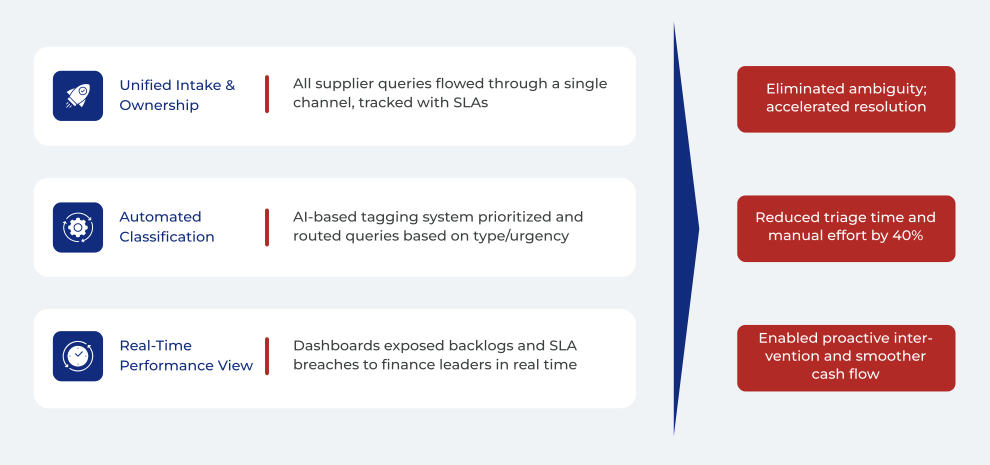
1. Centralized Intake
All supplier queries, across regions and functions, were funneled through a single web form and unified email channel as well as accounts payable helpdesk.
2. Smart Routing with Automation
A lightweight rule engine classified queries by type (e.g., PO mismatch, payment status) and routed them to the relevant team using predefined workflows.
3. Seamless ERP Integration
The model operated within existing ERP and finance workflows—ensuring zero disruption or additional tooling.
4. Live Reporting Layer
Dashboards built in Power BI allowed finance and AP leads to monitor backlogs, bottlenecks, and SLA trends in real time.
This wasn’t an add-on. It was a structural upgrade that embedded supplier enquiries into the finance organization’s governance framework—not just to respond faster, but to operate smarter.
The exhibit below captures the operational levers behind the transformation and the outcomes they delivered.
From Communication Gaps to Financial Control
The results spoke for themselves. Within nine months, the company recorded measurable improvements across the P2P value chain:
- 31% reduction in query resolution time
- 42% of enquiries auto-resolved e via automation and self-service
- Early payment discount was at 90%
- No increase in FTEs, despite growing supplier volumes
- Full audit trail for every interaction—supporting compliance and risk management
But the most critical shift was strategic:
Finance leadership finally had real-time visibility into where supplier-side friction occurred—and the ability to course-correct before it impacted DPO, cash flow, or vendor relationships.
The AP Helpdesk was no longer a passive queue. It had become a control layer woven into the finance operating system.
Conclusion: From Inbox to Infrastructure
What began as scattered communication became a structured, governed process—directly supporting the CFO’s broader goals: cash flow optimization, audit readiness, and stronger supplier trust.
Enquiry resolution is no longer a support task. It’s part of financial governance.
And ignoring it doesn’t just cost efficiency—it creates blind spots that risk control.
Want to bring supplier enquiry resolution into your financial control framework?
Explore our procure to pay services designed to help CFOs improve closure speed, reduce noise, and build audit-ready P2P systems—without disrupting existing infrastructure.