




The P2P Optimization Playbook: 8 Ways to Improve Control, Compliance, and Cash Flow
Last updated:
13 Jan, 2026 |
7 Minutes Read

Businesses face a growing financial burden due to manual, inefficient invoice processing, with costs estimated anywhere between $2.78 and 12.88 per invoice. AI-enabled procure-to-pay optimization can unlock significant benefits by improving accuracy, speeding up the process, and drastically bringing down costs.
With procure-to-pay process optimization, organizations can streamline end-to-end procurement and address the issue of hidden costs. This playbook outlines eight high-return areas to help procurement teams achieve quick wins and lay a strong foundation for future improvements.
The True Cost of Invoice Processing
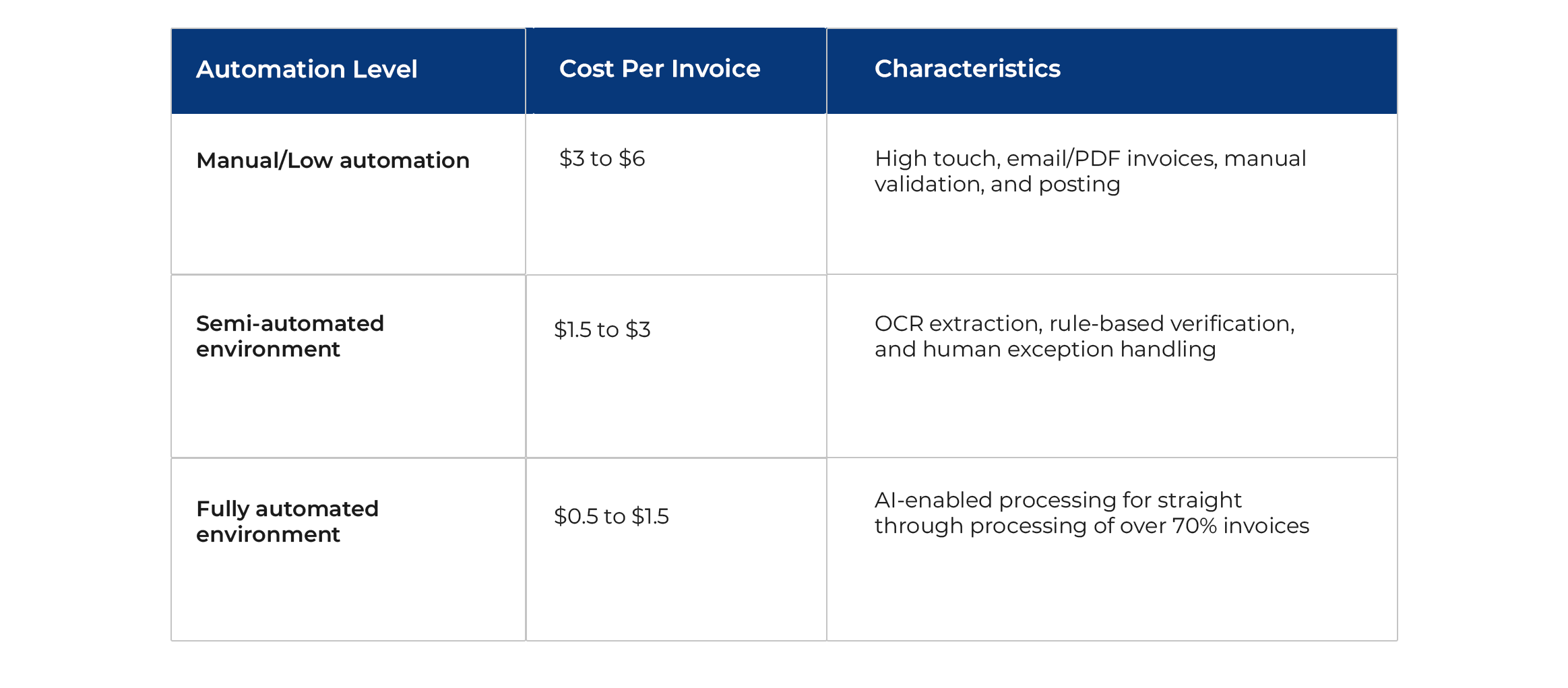
The processing cost per invoice varies based on the automation maturity of an organization. These estimates are based on internal Cogneesol data and benchmarking analysis.
Untapped Potential in the P2P Process
Lack of purchase clarity, process friction, and reliance on manual workarounds can reduce an organization’s profit margins. Procurement analysts estimate that getting spend under control can help enterprises realize savings of 6 to 12 percent for every dollar. For a company with $50 million in annual procurement, this could save $5 million in revenue.
The common challenges that impede such revenue savings include:
- Maverick Spend: Expenses made outside approved channels introduce unpredictability, weakening supplier relationships, and reducing purchasing leverage. When employees bypass established procurement processes, organizations miss out on bulk discounts and the full value of negotiated contract terms.
- Delayed Approvals and Missed Discounts: Lengthy approval cycles for requisitions and invoices can cause project delays, strained supplier relationships, and missed early payment discounts, which significantly impact working capital.
- Lack of Visibility and Control: Without a centralized view of the P2P process, it is difficult to track contract compliance, monitor supplier performance, and find cost-saving opportunities. This lack of visibility hinders strategic decision-making and makes it challenging to enforce procurement policies.
Each factor creates a slew of bottlenecks that slow down the procure-to-pay process substantially.
As a result, there are missed or delayed payments, poor cash flow management, and inefficient working capital utilization. Streamlining these processes can help organizations accelerate invoice approvals, improve supplier collaboration, and optimize cash flow management.
8 High-Impact Improvements for Immediate Results
Getting to a fully optimized P2P function cannot take place in a single leap; it requires multiple tactical enhancements.
1. Centralized Documentation
In procurement, documents are often scattered across multiple systems, email inboxes, and physical formats. This creates a significant operational drag, resulting in delays, compliance issues, and limited visibility.
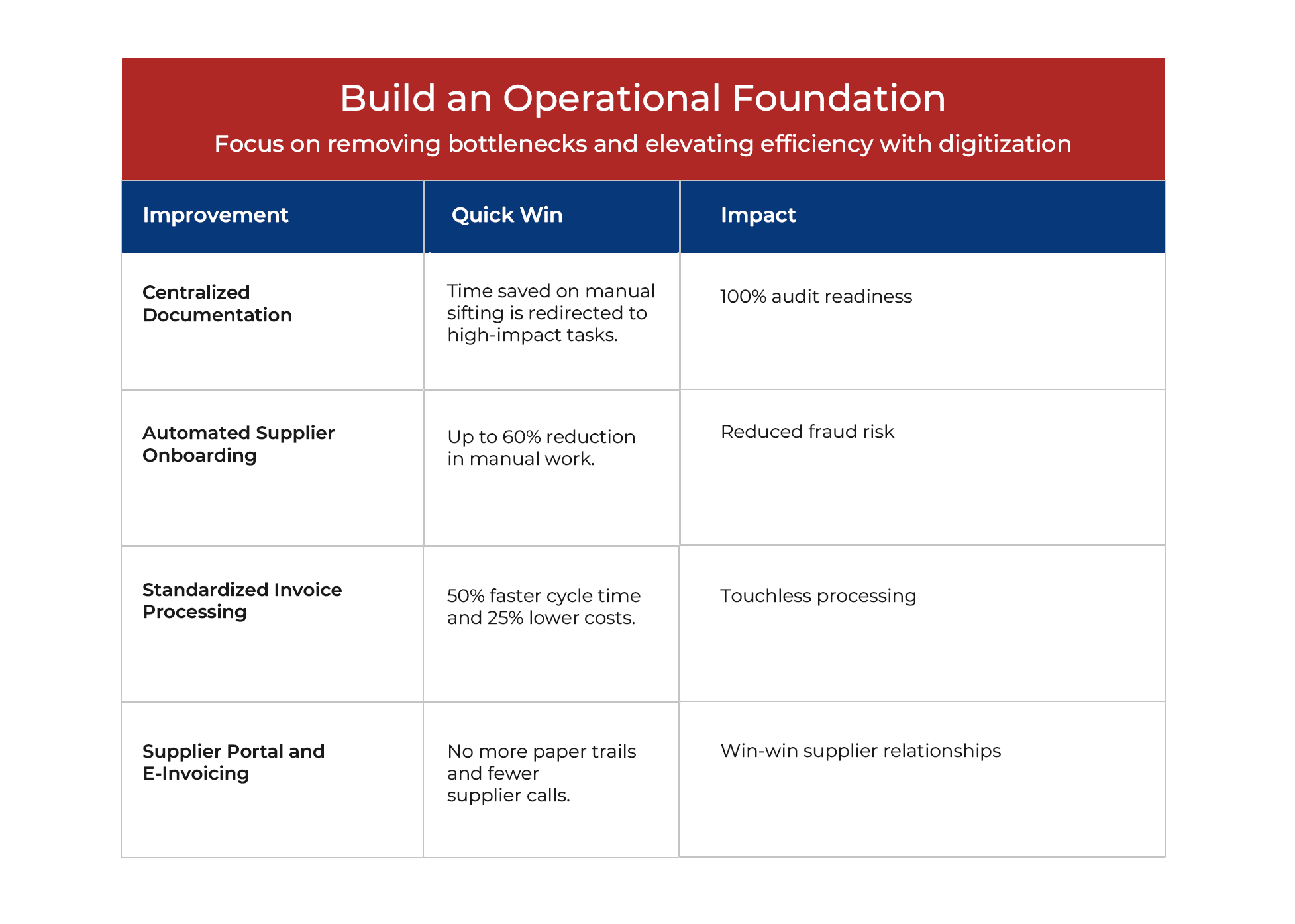
By centralizing documentation, organizations can create a single source of truth for all procure-to-pay (P2P) documents. This not only leads to swift document accessibility and audit readiness but also a step towards future automation. The quick win is the amount of time saved on manual sifting and utilizing that time to take on high-value tasks.
2. Automated Supplier Onboarding
Manual supplier onboarding is often slow and lacks adequate risk assessment. Automating onboarding with procure-to-pay solutions that enable self-service registration, automatic information validation, and third-party risk screening can significantly reduce onboarding time.
By implementing RPA bots, procurement teams can automate background verification, keep the supplier database up to date, and maintain a transparent audit trail. Automated onboarding makes it easier to add new suppliers, reduces the risk of fraudulent or non-compliant partners, and ensures reliable partners.
3. Standardized Invoice Processing
Manual invoice processing is a common cause of errors and delays in the procure-to-pay process. In a modernized P2P process, an invoice automatically goes through steps such as validation, matching, and posting. Cogneesol’s UI path-driven bots improved straight-through processing accuracy from 70% to 95%, significantly reducing processing cycle time.
A Netherlands-based consumer goods company that received invoices in different languages and formats moved to AI-driven OCR and automated invoice matching algorithms. Among other benefits, the upgrade helped the company reduce processing time by half and costs by a quarter.
4. Supplier Portal and E-Invoicing Tools
Traditional invoice management is sluggish and non-collaborative. By implementing e-invoicing and providing suppliers with a self-service portal, organizations can create a collaborative and efficient P2P environment. Portals simplify communication by reducing email exchanges. These practices improve supplier relationships and promote timely information flow.
Suppliers can send e-invoices, view real-time invoice status, and manage their data directly. The quick-win impact comes from eliminating paper trails while reducing supplier calls. It speeds up the invoice processing and payment cycle, increasing supplier satisfaction.
5. Vendor Relationship Management
Forging a strategic vendor management mindset unlocks considerable value. Segmenting suppliers by strategic importance lets organizations focus on building strong relationships.
A Vendor Relationship Management (VRM) system serves as a central repository for supplier data and supports performance evaluation, contract management, and collaboration, turning suppliers into strategic partners.
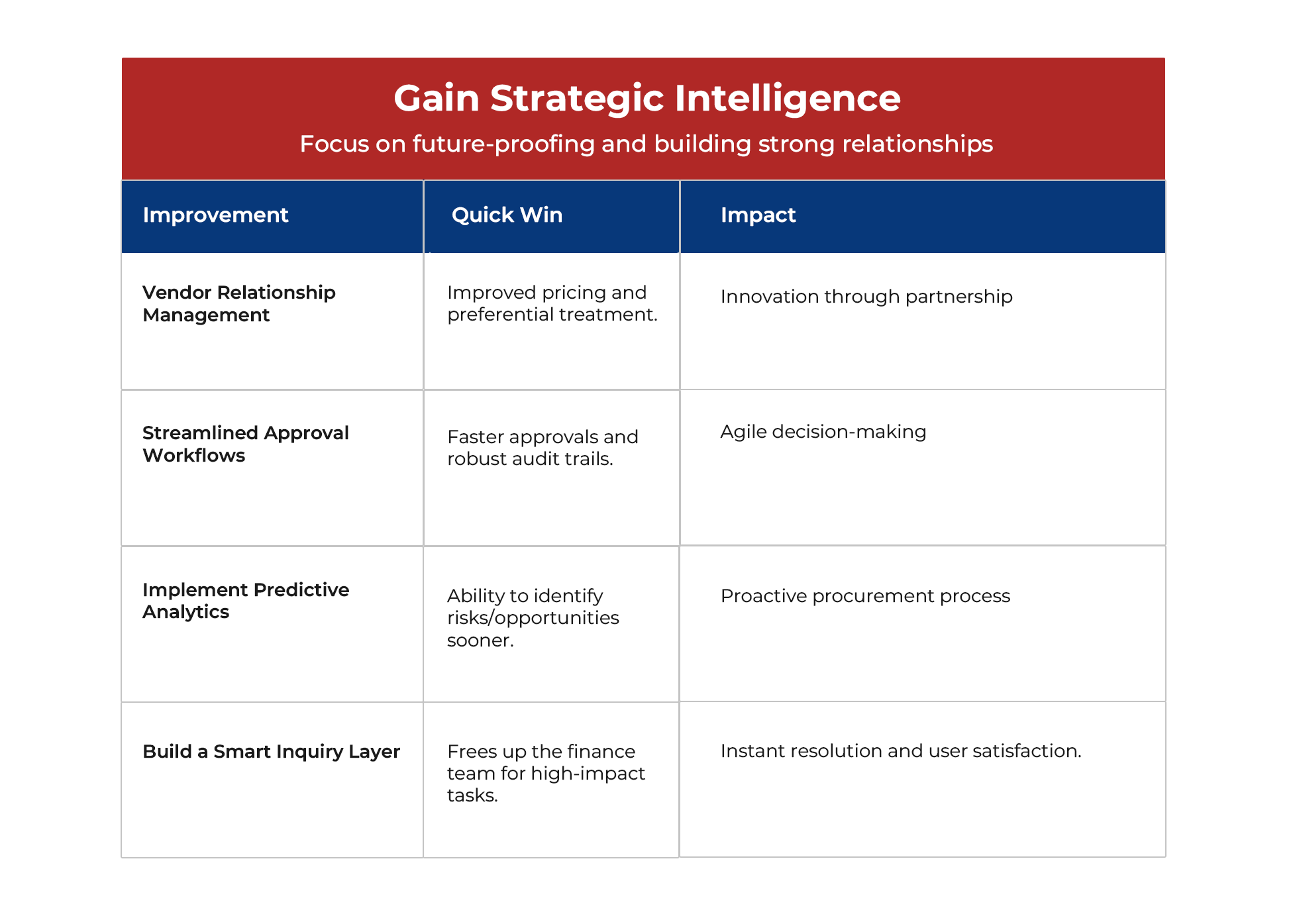
The quickest win is improved supplier collaboration, which gives organizations better pricing and preferential treatment. By speeding up vendor approval and maintaining strong relationships, organizations can negotiate better terms and seize discount opportunities with suppliers, and improve the bottom line.
6. Streamlined Approval Workflows
Complex and evolving approval processes result in payment delays. Organizations can accelerate the procure-to-pay cycle by identifying opportunities for standardization and implementing parallelization, which is the process of routing approvals to several stakeholders simultaneously.
Using a procure-to-pay system with configurable, rule-based workflows that automatically route documents for approval based on pre-defined rules increases compliance and creates a robust audit trail. Quick wins include faster approvals, better compliance with internal controls, and reduced administrative workload.
7. Implement Predictive Analytics
Traditional reporting allows organizations to review performance, but it cannot predict trends or risks. Using predictive analytics will enable organizations to forecast future spend, anticipate supply chain disruption, and proactively manage supplier risk.
With these insights, organizations can transition from a reactive to a proactive mode. The quick win impact is an organization’s ability to identify and address potential risks and opportunities sooner, enabling procurement operations to be more agile and resilient.
8. Build a Smart Inquiry Layer
The procure-to-pay process generates a large number of inquiries that can burn up resources. An intelligent inquiry management layer that uses an AI-powered chatbot with a central knowledge base can instantly respond to frequently asked questions, enabling the finance team to move past repetitive work and focus on high-value, strategic tasks.
With a smart system to handle enquiries effectively, organizations deliver a better end-user experience. It also helps improve the productivity of the procurement and finance teams and enhances their work satisfaction.
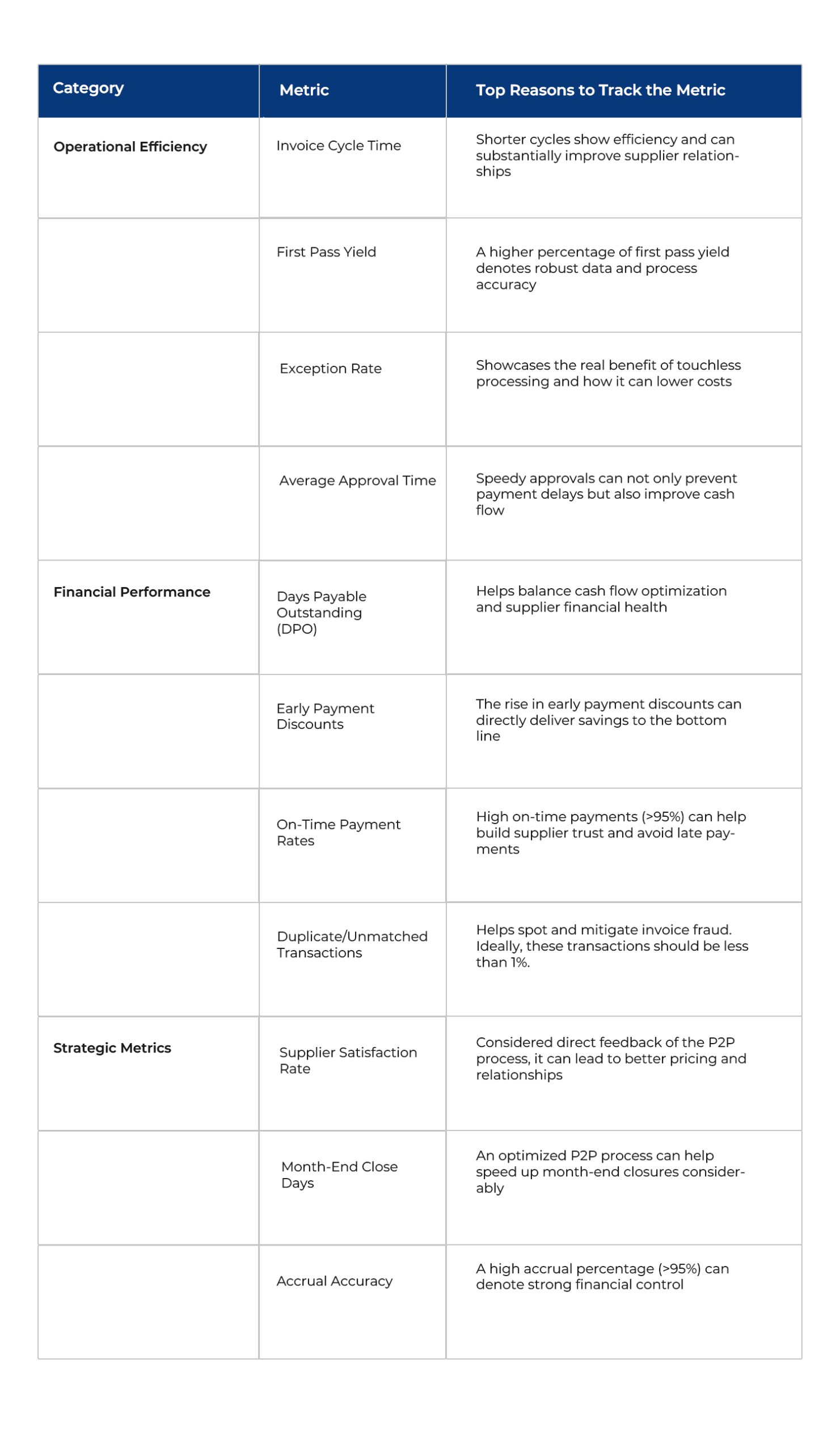
Critical Metrics to Measure P2P Performance
Organizations need to stay on top of critical performance indicators, which will enable them to understand the efficacy of process optimization and identify bottlenecks.
The Road to Procurement Excellence
At a time of perpetual change, the procurement function must transform from a transactional, process-oriented function to an intelligent, insight-driven partner to the business. The procure-to-pay process optimization strategy outlined in this article provides a straightforward path for this transformation.
As P2P improvements continue to add on, organizations can redirect savings and resources to develop new enhancements. When procurement teams take a more proactive approach, they can enhance risk management, develop strategic negotiation methods, and build stronger supplier relationships.
By focusing on high-impact improvements, organizations can achieve quick results, build momentum, and lay the foundation for a more strategic, value-added P2P function.
Looking for ways to optimize and level up your procure-to-pay process? Find out how Cogneesol’s expertise and solutions can help you realize strategic value and drive savings to your bottom line. Explore procure-to-pay best practices today to identify opportunities, optimize processes, and drive greater value.